
NOVA x Deniz MUMCU: An Interview on Body, Geography and Identity
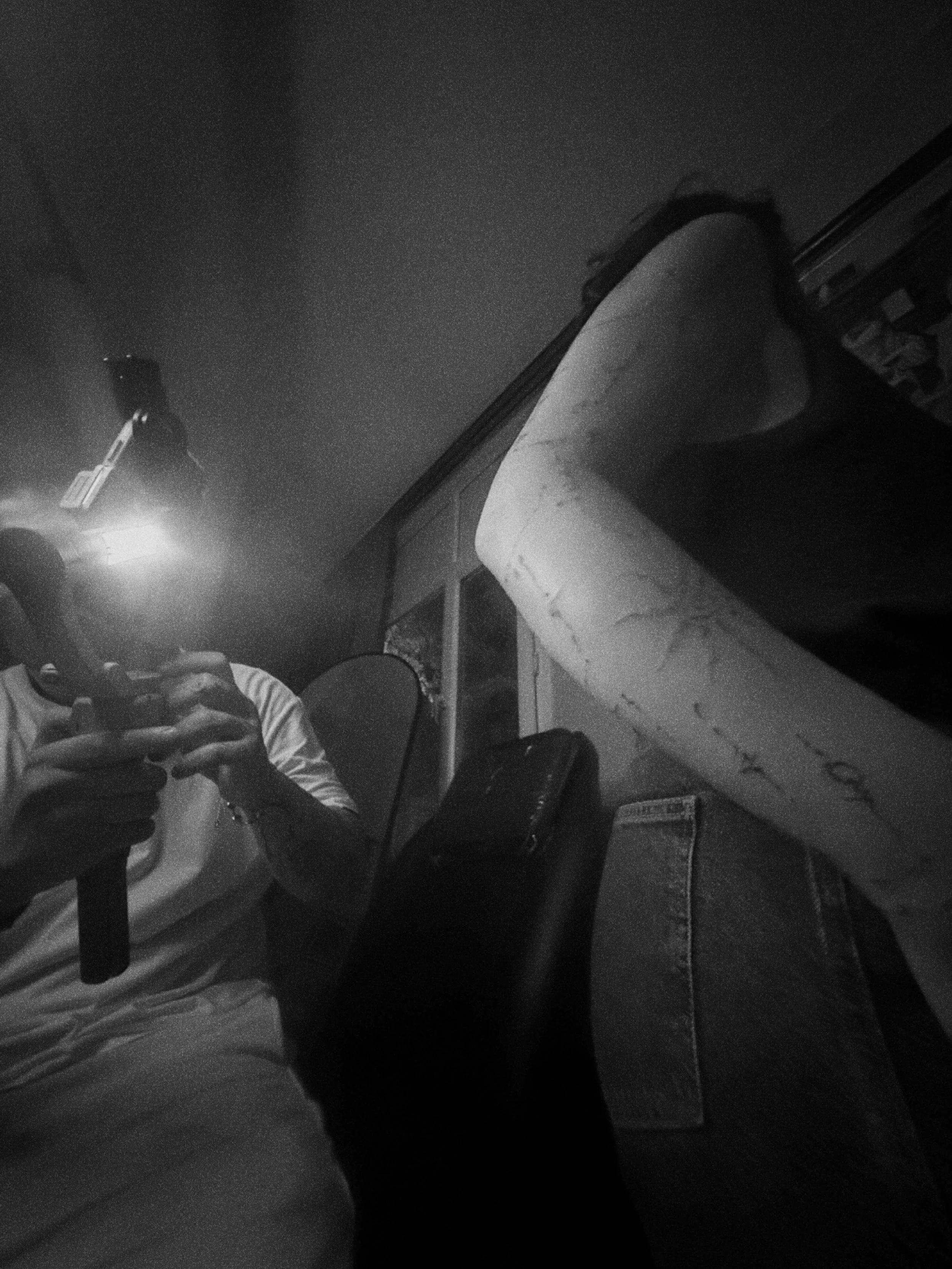
In the hands of Deniz Mumcu, tattooing becomes more than a mark — it turns into a bodily alphabet in humanity’s ongoing effort to understand and reimagine itself.
Each line carries the esoteric yet mesmerizing imagery of a forgotten language, a geography longing to be remembered, a world folding back into itself.
With the period he calls “Morphia,” this language now resonates not only on skin, but also on stone, through sound, and even within silence itself.
Our guest: İzmir-based tattoo artist Deniz Mumcu.
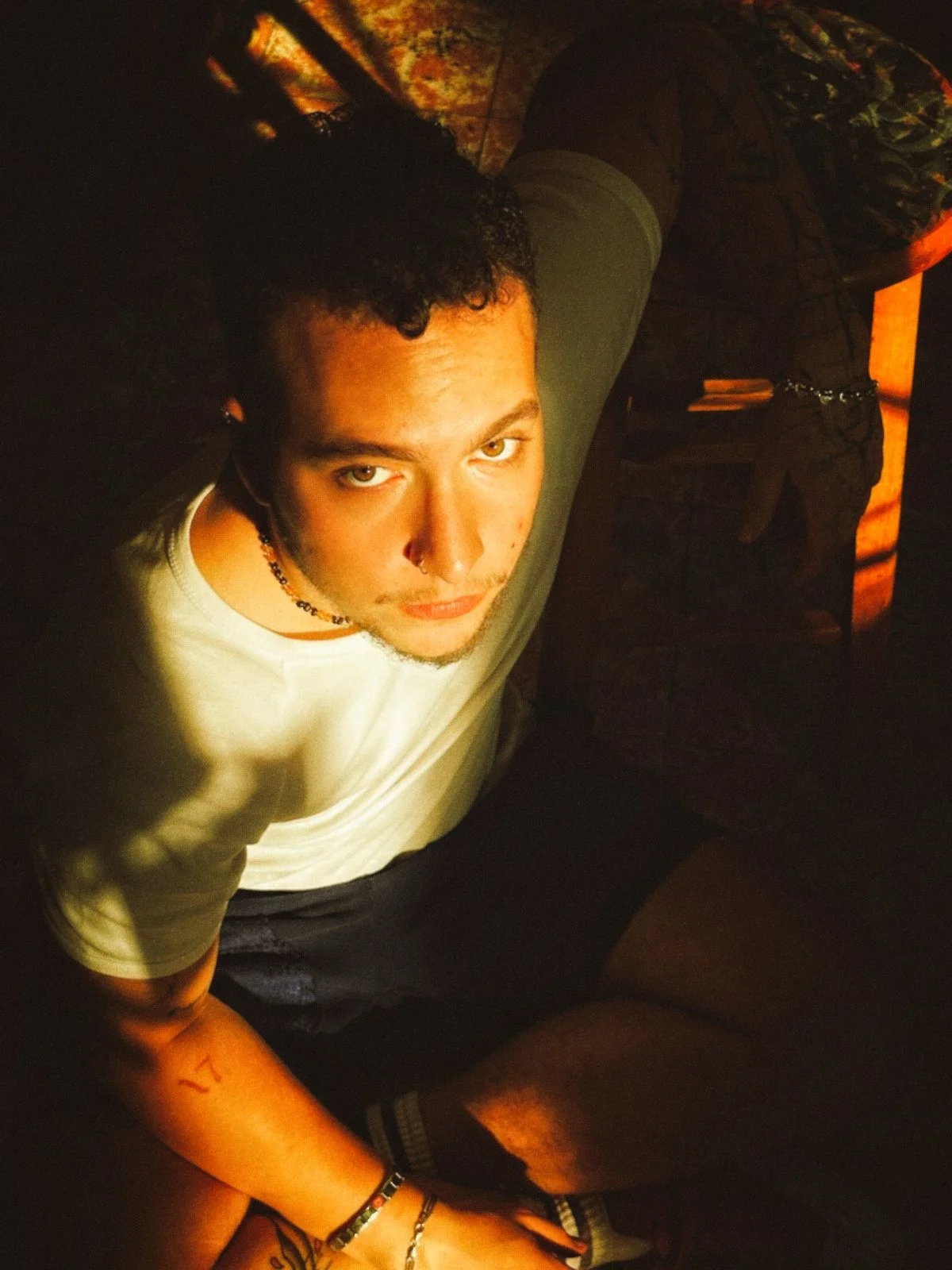
Deniz MUMCU
NOVA: We’re very happy to have you with us, Deniz. To start, could you tell us a bit about yourself and your artistic journey?
DENİZ: First of all, thank you for your care and for the thoughtfully crafted questions. It truly means a lot to be part of a project like this.
I’m Deniz, 22 years old, and I’ve been working professionally as a tattoo artist for about three years.
To be honest, my connection with art is a bit unusual — I didn’t turn to art; it pulled me toward itself. Being so deeply involved in art was never part of my plan.
But I find the way everything unfolded, and how life led me to where I am now, quite fateful.
NOVA: What kind of place does tattooing hold in your life? You practice it as a profession, yes, but do you see it more as a craft or as a form of storytelling?
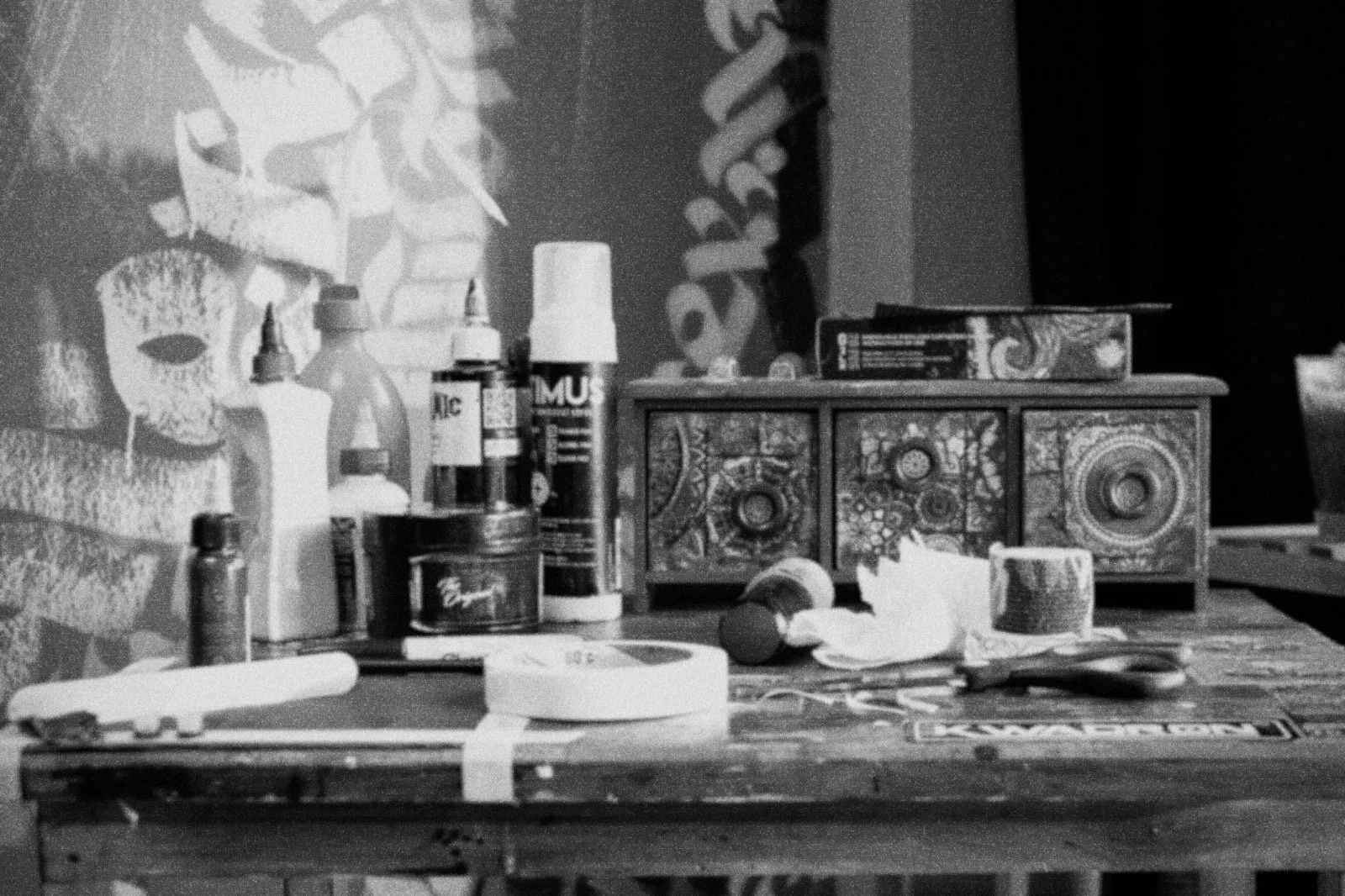
DENİZ: Well, the craft side of tattooing can never be denied. After all, it involves operating a machine. But it’s a very broad concept, because once you truly begin to understand the machine, you need to merge your own language — your linear style — with the interpretation of the body you’re working on in order to turn your work into art.
I also believe tattooing is a kind of ritual. A person engraves a symbol or a meaning they choose onto a part of the body that has chosen itself. During that process, a balance of giving and receiving is created — you experience pain, but as you go through it, you come closer to yourself.
To me, that’s a deeply mystical experience.
NOVA: Do you remember your first tattoo? When you compare it to your work today, what kind of change do you see?
DENİZ: Of course, I remember my first tattoo. Before doing it, I had spent around six months just watching my mentor and studying the technical aspects.
A tattoo I could now complete in five minutes took me forty-five minutes back then.
It was an incredibly exciting and valuable experience for me.
That intense excitement has now transformed into a feeling I experience much more rarely.
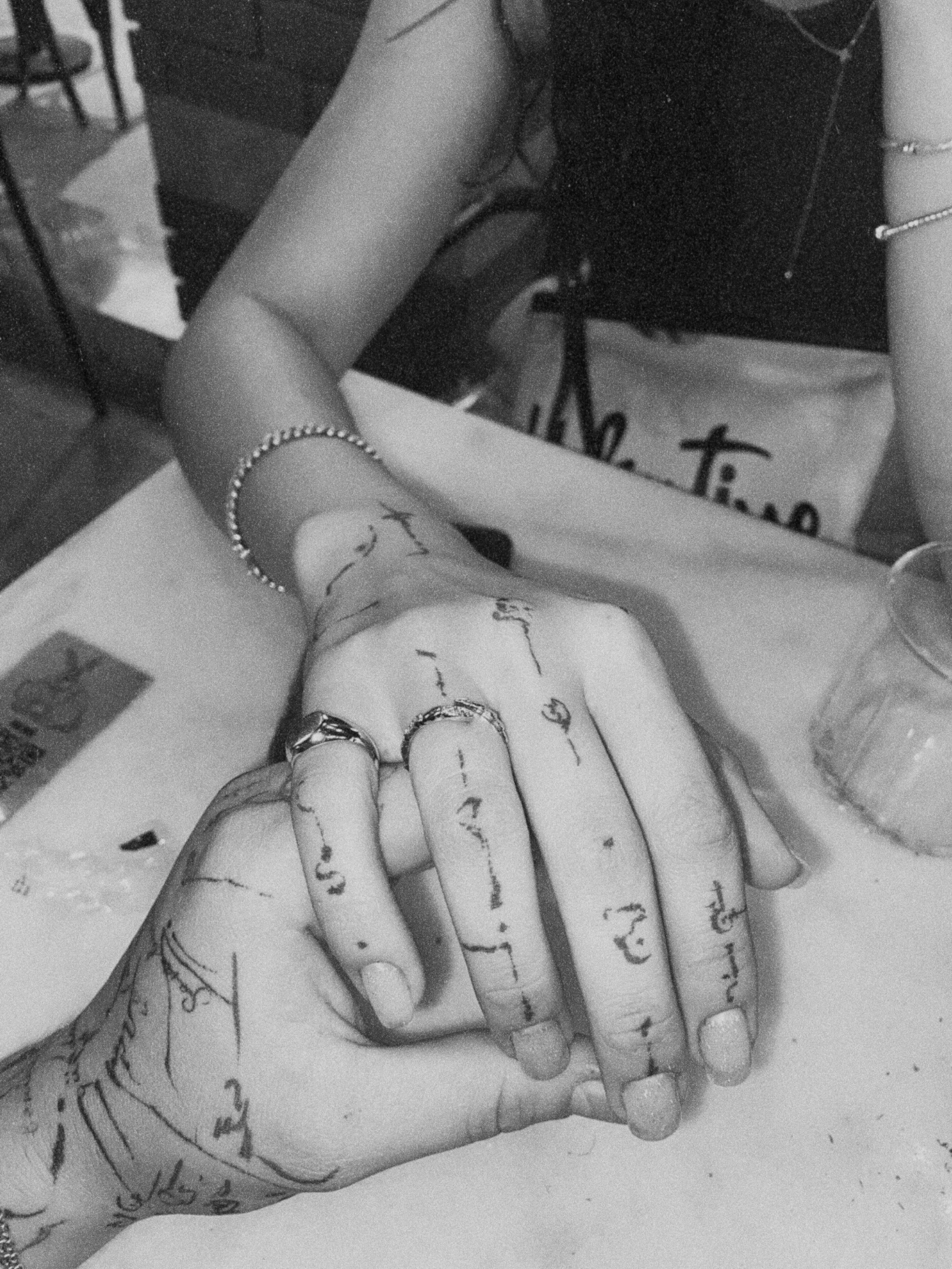
“Taking the tattoo away from the human body doesn’t diminish it — it universalises it.”
NOVA: In your design for SCOPS, you explored tattoo patterns on a material other than human skin. How did that experience affect your perception of what a “tattoo” is? Do you think removing the human element causes erosion, or does it open up new interpretive space?
DENİZ: For me, that experience was not a break but an expansion. Taking the tattoo away from the human body doesn’t diminish it — it universalizes it.
Because when you work on a surface other than skin, the tattoo ceases to be merely “body art” and becomes “a trace of existence.”
So I see it not as erosion, but as evolution.
NOVA: During the period you call Morphia, it feels as though you’ve finally found your voice and your linear language. The name itself carries a sense of transformation — of shape-shifting. What does Morphia mean to you? How did this process change your relationship with tattooing and with your own body?
DENİZ: For me, Morphia was a rebirth — both internal and formal. The idea of transformation has always fascinated me, because nothing is fixed, not even the human being.
During this period, my lines became more intuitive and inward-looking.
My relationship with the body also changed; I no longer see it as merely a surface but as a “field.” In each custom piece, the placement of the lines emerges instinctively from within me, and I paint the patterns I feel that person needs to carry.
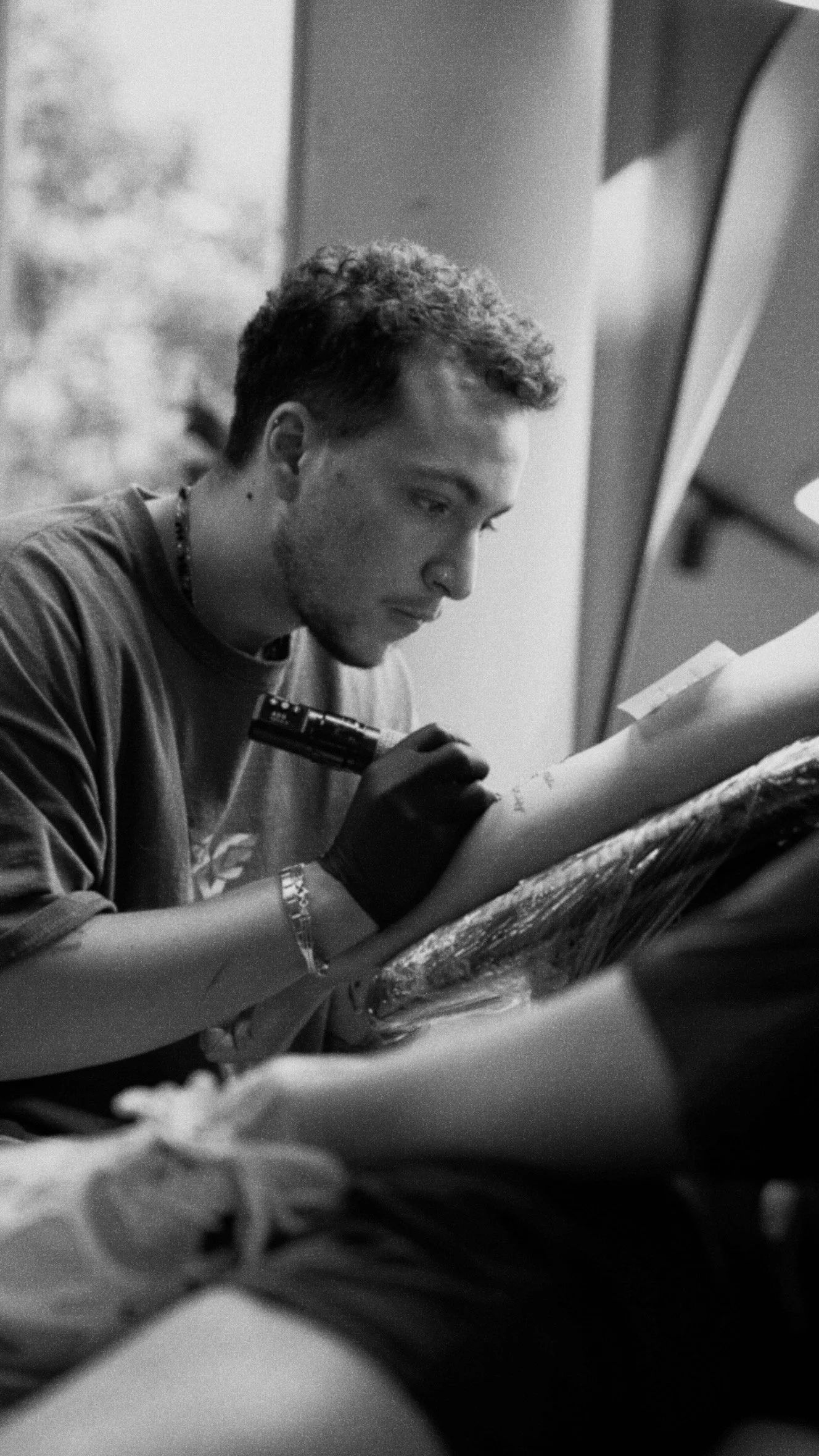
This process gives me a strong sense of flow — that’s why I draw immense inspiration from nature.
At the same time, the large motif created by the lines reminds me of something different each time I look at it. What drew me toward abstraction, away from traditional tattoo styles, was exactly that — each piece is unique and singular; in every eye, it tells a different story. And each time you look at it, it seems to transform its shape anew.
NOVA: In your works, the body is almost treated like a “map of the earth.” In some of your behind-the-scenes videos, we see compositions inspired by leaves and natural rhythms. Do you see this as a conscious geographical or topographical reading?
DENİZ: Absolutely — it’s a conscious reading. Because there’s a subtle parallel between nature and the human body.
The veins under the skin flow like rivers; the direction of the muscles resembles the slope of a terrain. I love reading that map. In every body, there’s an echo of nature. Turning that echo into lines is, for me, a kind of cartography.
“Tattooing is not only a craft — it’s a ritual. You experience pain, but as you pass through it, you come closer to yourself.”
NOVA: Tattooing is one of humanity’s ways of reinterpreting the body. For you, how personal and how universal is this transformation?
DENİZ: For me, what is personal is already universal. While I search for meaning within my own body, I’m also searching for traces of human existence.
Every tattoo is a touch — both mine and that of the person I’m tattooing.
So even though it begins as a personal story, it always transforms into a shared intuition.
NOVA: There’s something in your lines that feels like traces of an ancient alphabet. Are these lines “Deniz’s language”?
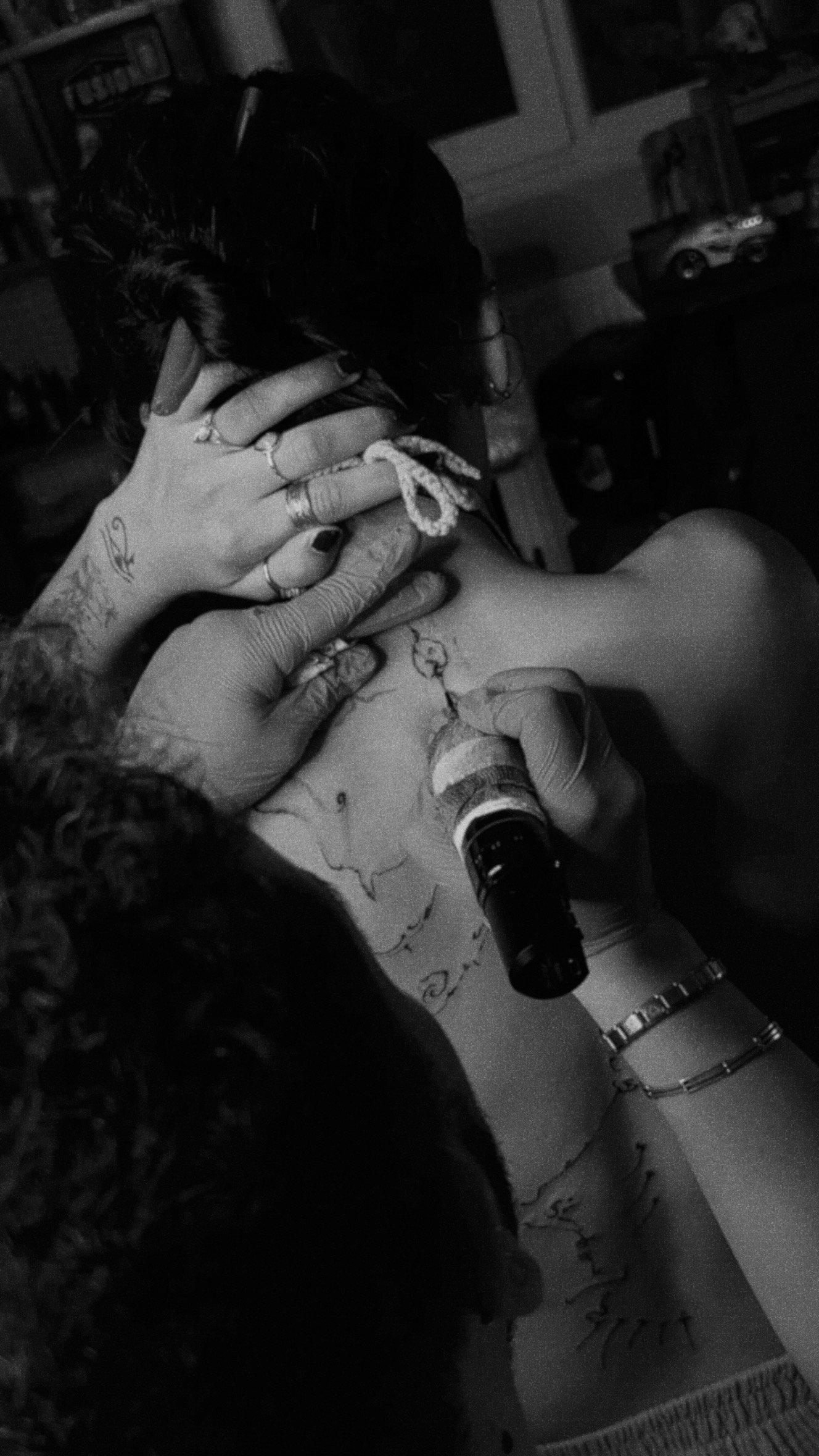
DENİZ: Yes, there’s actually an alphabet. Some of the lines and symbols I use regularly carry special meanings for me. I try to place them on the body according to a sense of balance.
Others are symbols that arise spontaneously, ones I feel compelled to create on the area I’m working on.
Perhaps these symbols will gain their meanings later.
So yes, there’s definitely an alphabet in my work — but I don’t even know the meanings of some of the symbols yet.

NOVA: What does Turkish culture, mythology, or Eastern symbolism mean to you?
DENİZ: Turkish culture and symbolism hold a very special place for me. I learned most of what I know about this thanks to my mentor, Bekir Türkcan — he opened a door for me in that sense.
I think Turkish symbols are powerful and profound, both in meaning and in energy. Each of them is like a language that has filtered through the consciousness of the past to reach the present; reinterpreting that language through my lines gives me both a sense of belonging and inspiration.
NOVA: How do you build a bridge between body art and cultural identity?
DENİZ: I believe cultural identity is essentially a shared heritage — the sum of meanings a society accumulates over time.
I see body art as the present-day form of that heritage. Every symbol is, in fact, a trace of the past.
In my lines, I feel that I bring together both a personal and a collective story.
NOVA: Lastly, what kind of creation do you envision for the NOVA x Deniz collaboration? A digital exhibition, a visual story, perhaps a project exploring bodily geographies…?
DENİZ: I see this collaboration as a transitional space — a point where the digital and the physical, the human and the natural, the line and the sound meet.
Maybe it begins with a digital exhibition and then returns to the body as a story.
But above all, I’d like us to redefine the idea of transformation together — in a way that aligns with the spirit of Morphia.